

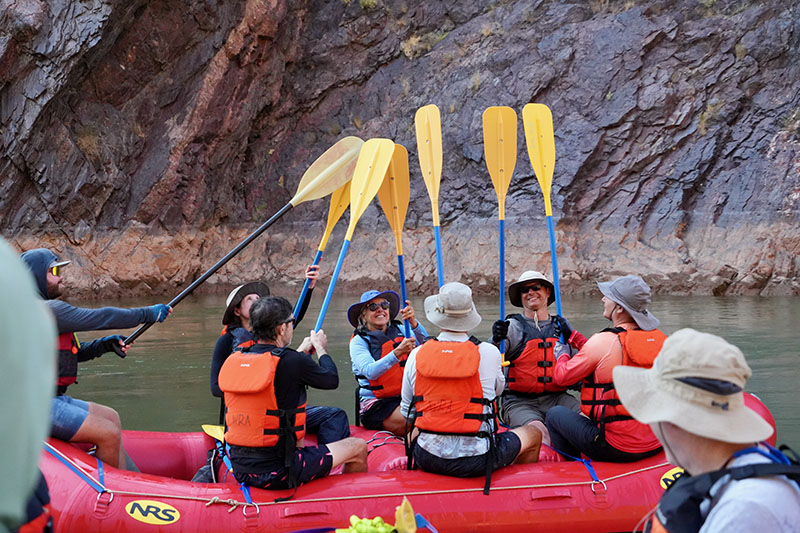
Choosing between motorized and non-motor (oar-powered) rafting trips is one of the most important decisions when planning a Grand Canyon river adventure. Both options travel through the legendary Colorado River inside the Grand Canyon, but the experience feels very different depending on how you move downstream.
This comparison page is designed to help you clearly understand the differences—so you can choose the trip that truly fits your time, travel style, and expectations.
Quick Overview: What’s the Difference?
| Feature | Motorized Rafting Trips | Non-Motor (Oar-Powered) Rafting Trips |
|---|---|---|
| Trip Length | Shorter (5–8 days typical) | Longer (10–16 days typical) |
| Pace | Covers more miles per day | Slower, river-paced travel |
| Noise Level | Low engine noise in calm sections | Quiet, no motor noise |
| Physical Demand | Lower | Moderate |
| Canyon Immersion | Broad overview | Deep, immersive |
| Best For | Limited time, first-timers | Traditionalists, repeat visitors |
Motorized Rafting Trips: See More in Less Time
Motorized rafting trips use stable rafts powered by small engines during calm stretches. This allows guests to travel farther each day while still experiencing all major rapids.
Why Travelers Choose Motorized Trips
-
Ideal if you have limited vacation time
-
Popular for first-time Grand Canyon rafters
-
Covers longer canyon sections in fewer days
-
More relaxed physical requirements
-
Still includes hikes, waterfalls, and beach camping
Motorized trips are often considered the most efficient way to experience a large portion of the canyon.
Non-Motor Rafting Trips: The Classic River Experience
Non-motor rafting trips rely entirely on oars and the natural current of the river. These trips move at a slower pace, allowing travelers to settle deeply into canyon life.
Why Travelers Choose Non-Motor Trips
-
Quieter, more traditional river travel
-
Longer trips with deeper canyon immersion
-
More time for side-canyon exploration
-
Ideal for travelers seeking simplicity and presence
-
A favorite among repeat Grand Canyon visitors
Non-motor trips often feel less like a tour and more like a journey.
👉 Explore details here:
Non-Motor Rafting Adventure
Which Trip Style Is Right for You?
Choose a Motorized Trip If You:
-
Have a fixed schedule
-
Want to see more of the canyon quickly
-
Prefer a less physically demanding trip
-
Are rafting for the first time
-
Are traveling with family (age limits vary)
Choose a Non-Motor Trip If You:
-
Have more time available
-
Want a quieter, slower experience
-
Value tradition and immersion
-
Enjoy extended time in nature
-
Are returning to the Grand Canyon
Routes Matter Too
Both motorized and non-motor trips operate on different canyon sections, including Upper Canyon, Lower Canyon, and Full Canyon routes.
Understanding route differences is just as important as choosing raft type.
👉 Compare all route options here:
Grand Canyon Rafting Route Options
Why Booking Support Makes a Difference
Because Grand Canyon rafting is permit-based and highly regulated, choosing the right trip involves more than selecting a raft type.
Advantage Grand Canyon helps travelers:
-
Compare motorized and non-motor trips side by side
-
Understand route, season, and outfitter differences
-
Choose trips that fit time and comfort level
-
Avoid common booking mistakes
-
Plan with confidence from start to finish
Rather than pushing one option, the goal is to help you choose well.
👉 Start planning here:
Advantage Grand Canyon
Final Thought
There is no “better” choice—only the right choice for you.
Motorized rafting offers efficiency and accessibility.
Non-motor rafting offers depth and tradition.
Both reveal the Grand Canyon in powerful ways. The key is choosing the experience that matches how you want to travel through one of the world’s greatest landscapes.